

wellness
Can Massage Guns Reduce Soreness After Workouts?
Oct
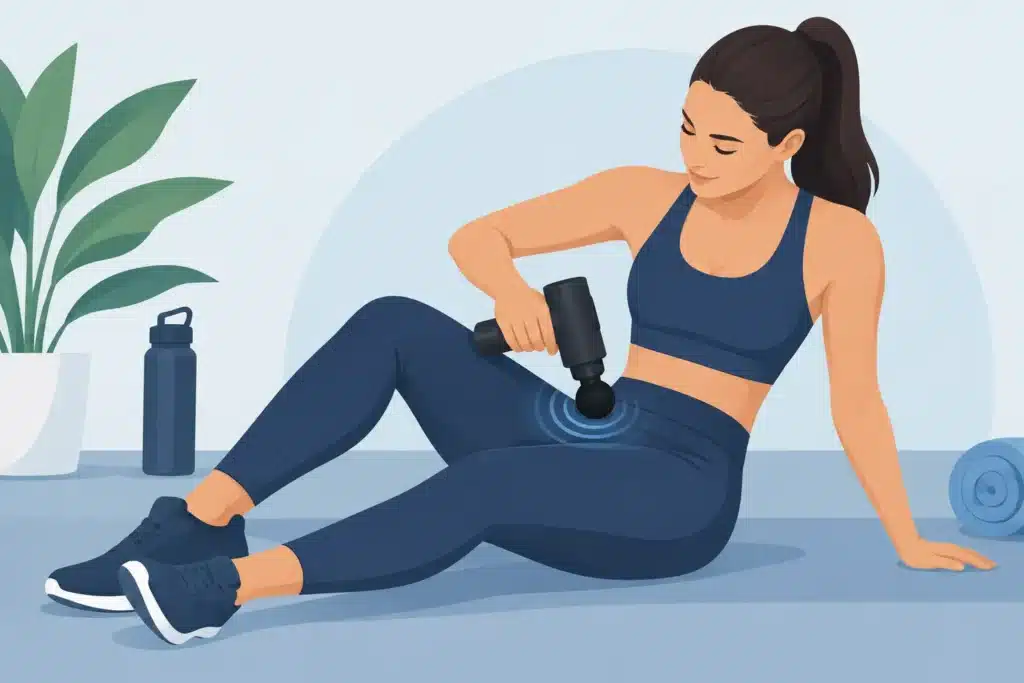
That tight, tender feeling when you walk downstairs after leg day or reach for your laptop after a long desk-bound afternoon can make even simple movement feel like work. So, can massage guns reduce soreness? For many people, they can make sore muscles feel less stiff, more comfortable, and ready to move again – especially when used with smart recovery basics like sleep, hydration, and gentle movement.
A massage gun is not a shortcut around recovery, and it will not repair a serious injury. What it can offer is convenient, targeted percussion therapy at home, right when your body needs a little extra care. Used well, it can turn a rushed post-workout routine into a few intentional minutes of relief.
Can Massage Guns Reduce Soreness? What the Evidence Suggests
Massage guns deliver rapid, repeated pulses into soft tissue. This percussion can create a temporary change in how tight or tender a muscle feels, helping many users relax after exercise, prolonged sitting, travel, or repetitive daily tasks.
Research on massage and percussion-style therapy suggests potential benefits for delayed-onset muscle soreness, often called DOMS. This is the soreness that tends to peak a day or two after an unfamiliar or demanding workout. The biggest, most consistent benefit is usually a reduction in the feeling of soreness and stiffness, rather than an instant restoration of full muscle function.
That distinction matters. If your thighs are sore after squats, a massage gun may make it more comfortable to walk, bend, or start an easy mobility session. It cannot erase the training stress that caused the soreness, nor should it persuade you to push through pain that feels sharp, sudden, or wrong.
For everyday recovery, that is still meaningful. Feeling looser and more comfortable can help you maintain gentle movement, which is often more useful than spending the whole day completely still.
Why Percussion Can Feel So Good on Tired Muscles
Soreness is not only about the muscle itself. Your nervous system also plays a role in how strongly you perceive discomfort. The steady pressure and vibration from a massage gun may temporarily calm that heightened sensitivity, while the physical stimulation can warm up the area and make movement feel easier.
Many people also notice a short-term improvement in range of motion. If your hips feel restricted after sitting through meetings or your calves feel rigid after a run, a brief session may help you move more freely before stretching or light exercise. Think of it as preparation and comfort support, not a replacement for strength, mobility, or proper training progression.
There is a practical advantage, too. A handheld device lets you reach the large muscle groups that often carry the most tension: glutes, quads, hamstrings, calves, upper back, and shoulders. You do not need an appointment, a complicated setup, or an hour carved out of an already busy day.
When to Use a Massage Gun for Soreness
Timing depends on your goal. Before a workout, use a massage gun briefly on the muscles you plan to train. A light, quick session can help you feel more awake and mobile without leaving the area overly relaxed. Keep the pressure comfortable and avoid turning a warm-up into a deep-tissue treatment.
After a workout, wait until your breathing and heart rate have settled, then spend a few minutes moving over the muscles that worked hardest. This can be a calming signal that your training session is over and recovery has started. It is especially useful when paired with water, a protein-rich meal, and a little easy walking.
On the day after a hard workout, use it to ease stiffness rather than trying to “break up” soreness. Start on a low setting, glide slowly, and let comfort guide the session. If a muscle is intensely tender, more force is not better. A lighter touch may provide more relief than pressing hard into an already irritated area.
For desk-related tension, a short session at the end of the workday can be equally valuable. The upper back, glutes, and calves often become tight from hours of limited movement. A few minutes of percussion followed by shoulder rolls, a walk, or gentle hip mobility can help your body shift out of that stuck-at-the-desk feeling.
How to Use a Massage Gun Without Overdoing It
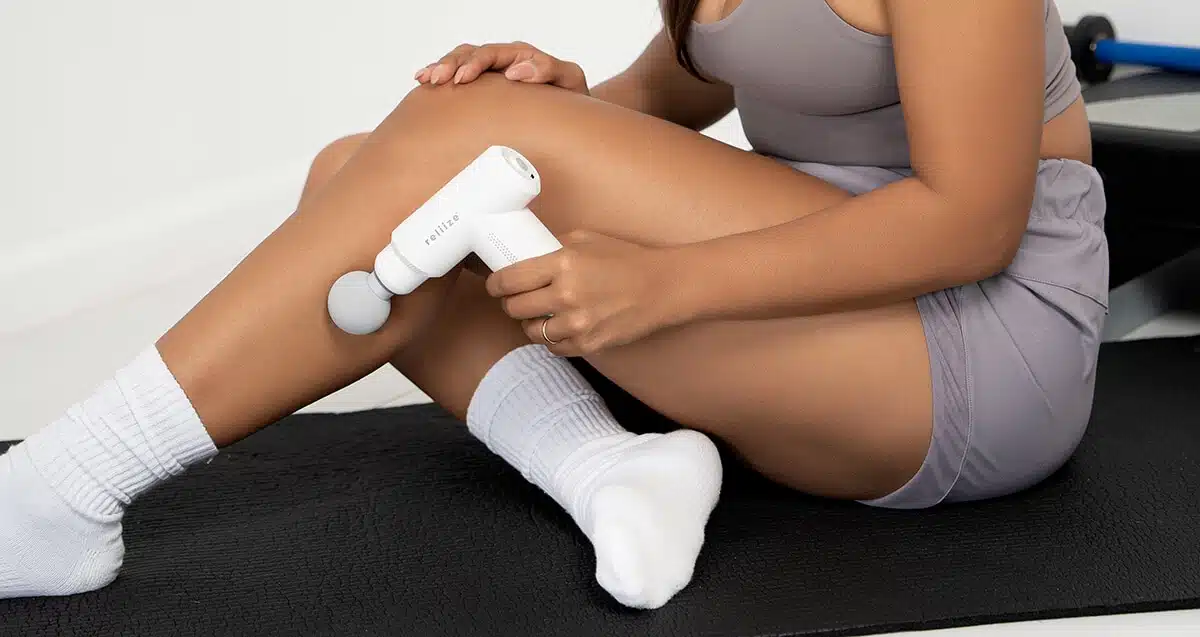
A simple technique tends to work best. Choose a low or moderate speed, rest the device lightly on the muscle, and keep it moving. Spend roughly 30 seconds to two minutes on one area, depending on its size and sensitivity. Large muscles like the quads and glutes can tolerate a little more time than smaller areas.
Avoid chasing pain. A useful session should feel relieving, mildly intense at most, and easier to tolerate as you go. Bruising, numbness, tingling, or worsening pain are signs to stop. More pressure and more time do not necessarily produce better results.
It also helps to match the attachment to the area. A broader, softer head is often comfortable for large muscle groups and general soreness. A smaller attachment can be useful for more precise work around dense muscles, but it requires a gentler hand. Never use a massage gun directly over bones, joints, the front or sides of the neck, the spine, or the head.
Try this easy recovery sequence after a lower-body workout: spend a minute on each quad, glute, hamstring, and calf at a comfortable setting, then take a five- to ten-minute walk. You are looking for a noticeable shift from heavy and stiff to warm and mobile – not total numbness or exhaustion.
What a Massage Gun Cannot Fix
A massage gun can be a powerful comfort tool, but it is not the answer to every kind of pain. Skip it over strains, sprains, suspected tears, swollen areas, acute inflammation, open skin, varicose veins, or unexplained lumps. Do not use it on an area that feels hot, looks significantly bruised, or causes sharp pain with normal movement.
Get medical guidance before using percussion therapy if you have a bleeding disorder, take blood thinners, have reduced sensation from neuropathy, have a history of blood clots, are pregnant, or have a condition affecting your bones or circulation. The same caution applies if soreness persists longer than expected, keeps returning in the same spot, or comes with weakness, fever, severe swelling, or loss of function.
The goal is to support your body, not override its warning signals. If you have to convince yourself that pain is “normal,” pause and reassess.
Build a Recovery Routine That Actually Fits Your Life
The most effective recovery plan is usually not complicated. It is the one you can repeat after a hard workout, a long shift, or a stressful day. Use your massage gun as one part of that routine, alongside sleep, adequate food, hydration, and low-intensity movement.
For active adults, a device such as a Reliize massage gun can make that routine feel more accessible. Instead of waiting until tension becomes overwhelming, you can take a few minutes at home to target the muscles that feel overworked and get back to your evening with less distraction.
Pay attention to your own response over a couple of weeks. Do you move more comfortably after a session? Does a low setting help your shoulders unwind after screen time? Does using it after training make you more likely to take a recovery walk rather than collapse on the couch? Those practical changes are more valuable than chasing a dramatic, instant cure.
Your body does not need punishment to recover. Give sore muscles a little time, consistent care, and the kind of targeted relief that makes it easier to keep moving forward.
