


wellness
Best Massage Gun for Muscle Soreness?

May
You feel it when you stand up from your desk, when stairs suddenly seem rude, or when yesterday’s workout still has your legs arguing with you. A massage gun for muscle soreness can be a surprisingly effective way to bring relief home, especially when you want something faster than stretching alone and easier than booking another appointment.
The appeal is simple. You get targeted percussion therapy on demand, right where your body feels tight, stiff, or overworked. But not every sore muscle needs the same intensity, and not every device fits the same routine. If you want real relief instead of a gadget that ends up in a drawer, it helps to know what a massage gun actually does, when it works best, and how to use it without overdoing it.
Why a massage gun for muscle soreness works
Muscle soreness usually shows up for a few familiar reasons. Sometimes it is delayed onset muscle soreness after a workout. Sometimes it is tension from sitting too long, carrying stress in your shoulders, or repeating the same movement all day. In both cases, the muscle can feel tight, tender, and less willing to move the way it should.
A massage gun uses rapid, repeated pulses to stimulate soft tissue. That percussion can help increase local circulation, loosen up tight areas, and make stiff muscles feel more mobile. For many people, it also feels good in the most practical sense – it helps the body relax when everything has been clenched for hours.
That said, there is a difference between relief and cure. A massage gun can be excellent for managing soreness and tension, but it is not a replacement for rest, hydration, mobility work, or medical care when pain feels sharp, persistent, or unusual. The best results usually come when you treat it as part of a smarter recovery routine, not the entire routine.
What to look for in a massage gun for muscle soreness
If your goal is everyday relief, more power is not automatically better. A device that is too aggressive can make tender muscles feel worse, especially if you are new to percussion therapy. What matters more is having enough range to adjust the experience to your body.
Adjustable speed matters more than hype
Soreness is not one-size-fits-all. Calves after a long run may need a different setting than your upper back after a laptop-heavy day. A good device should let you start low and build up gradually. That flexibility is what makes it useful for both recovery days and daily tension relief.
If you only have one overly intense mode, you are less likely to use it consistently. And consistency is where the real value shows up.
Attachment heads should match the area
Different attachments are not just a bonus feature. They change how the pressure feels and where it works best. A round head tends to be the most versatile for larger muscle groups like quads, hamstrings, and glutes. A flatter head can feel more controlled on dense areas. A fork-shaped attachment is often used around muscles near the spine or Achilles area, while a bullet head is more precise for smaller knots.
For most people, a few well-designed attachments are better than a huge collection you never touch. The point is usability, not clutter.
Battery life and weight affect real-life use
A massage gun can sound impressive on paper and still be annoying to use. If it is too heavy, your arm gets tired before your back gets relief. If the battery dies quickly, it stops being convenient. If it is excessively loud, you may avoid using it at night or in shared spaces.
For home recovery, comfort matters. A device that is easy to hold, simple to charge, and quiet enough to use while winding down tends to become part of your routine instead of a one-week experiment.
When to use a massage gun and when to wait
Timing changes the experience. If you use a massage gun before exercise, the goal is usually to wake up the muscles and improve mobility. In that case, shorter sessions and moderate intensity often work well. You are preparing the body, not exhausting it.
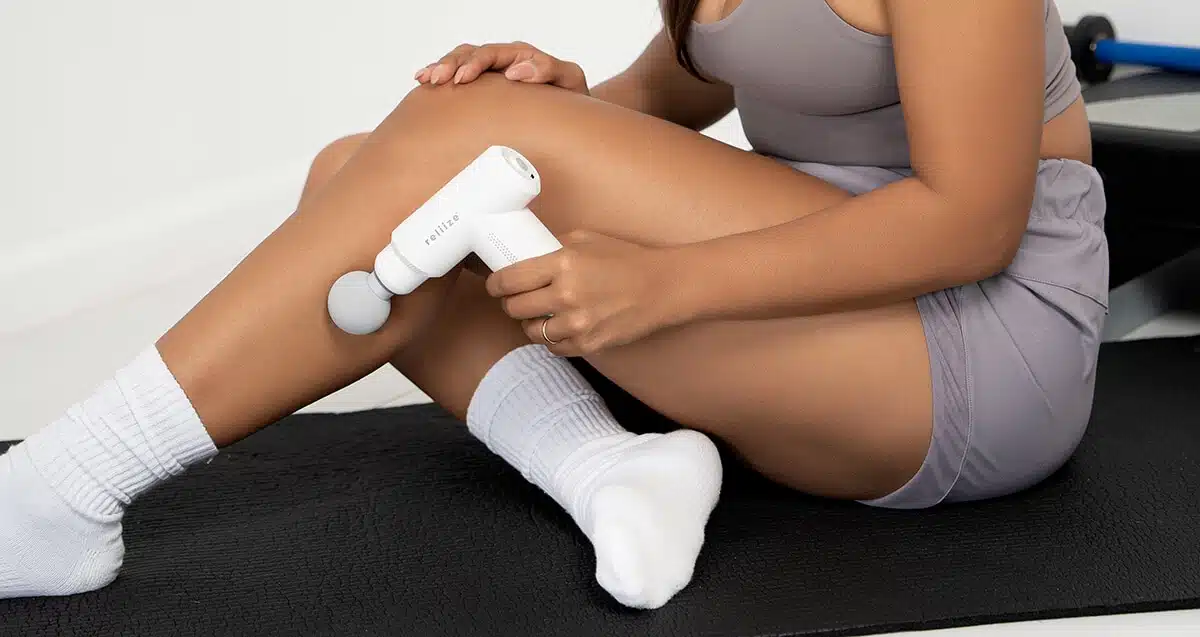
After exercise, the goal shifts toward easing tightness and helping the body settle down. This is where many people use percussion therapy for sore legs, glutes, shoulders, or back muscles. It can be especially helpful after strength training, long walks, cycling, or any day when your body feels loaded and heavy.
But there are times to pause. If you have bruising, acute injury, swelling, numbness, or pain that feels sharp rather than sore, a massage gun is not the move. The same goes for directly treating joints, bones, or sensitive areas like the front of the neck. Relief should feel controlled and intentional, never like you are trying to hammer your body into submission.
How to use a massage gun for muscle soreness without overdoing it
This is where people often get better results with less effort. You do not need a long, intense session to make a difference. In fact, too much pressure can leave a muscle more irritated than relaxed.
Start lighter than you think
Begin on a low setting and keep the device moving slowly over the muscle. Spend about 30 seconds to 2 minutes on a general area, depending on how it feels. If you hit a tight spot, linger briefly, but do not camp there with maximum force.
A good rule is to let the device do the work. Pressing hard usually does not improve the result. It just increases the chance of tenderness afterward.
Focus on muscle, not pain points
If your shoulder hurts, the sore spot may not be the only area involved. Tightness in the upper back, chest, or surrounding muscles can all contribute. The same goes for lower-body soreness. If your knees feel strained after activity, working the quads, hamstrings, and calves may be more useful than poking around the knee itself.
Thinking in muscle groups gives you a safer and more effective approach.
Pair it with simple recovery habits
Percussion therapy works best when it supports the basics. A short session followed by light stretching, a walk, water, or a warm shower can feel noticeably better than using the device alone. If your soreness comes more from long workdays than workouts, try using it during your evening reset instead of waiting until the discomfort is at its worst.
That is part of the appeal of at-home wellness tech. Relief does not have to be complicated to be effective.
Common mistakes that make sore muscles feel worse
One of the biggest mistakes is treating every ache like deep tissue territory. Not all soreness needs high intensity, and sensitive muscles often respond better to gentler, shorter sessions.
Another mistake is using a massage gun only when pain becomes impossible to ignore. Small, regular sessions usually outperform occasional overcorrections. If your neck and shoulders tighten up every workday, five minutes of consistent use can do more than one aggressive session on the weekend.
There is also the issue of expectations. A massage gun can help you feel looser, less stiff, and more comfortable, but it will not erase poor sleep, chronic stress, bad training form, or zero recovery time. Smart wellness tools work best when they fit into a routine built around actual care.
Is a massage gun worth it for everyday soreness?
For a lot of people, yes – especially if soreness is a repeat problem and convenience matters. If you are balancing work, workouts, family life, and too much screen time, having relief available at home can change the way recovery fits into your day. Instead of waiting until tension builds into a bigger problem, you can address it in real time.
That convenience is a real benefit, not a luxury. When self-care is easy to reach, it is more likely to happen. And when a device is designed well, it can turn a few spare minutes into something that actually helps your body feel better.
A massage gun also makes sense for people who want more control over intensity and timing. You decide whether you need a quick pre-workout warmup, a post-leg-day reset, or a few minutes of shoulder relief before bed. That flexibility is exactly why recovery devices have become staples in more at-home wellness routines.
Reliize is part of that shift toward smart, accessible relief – bringing recovery technology into daily life in a way that feels practical, modern, and easy to stick with.
The right choice depends on your soreness pattern
If your soreness comes mostly from exercise, look for a device with enough power and battery life to handle larger muscle groups regularly. If your discomfort is more about desk posture, stress, and tension headaches, comfort, lower-speed control, and ease of handling may matter more than maximum intensity.
It also depends on your tolerance. Some people love a stronger percussion feel. Others want something gentler that helps them unwind at the end of the day. The best massage gun is not the one with the most dramatic specs. It is the one you will actually use correctly and consistently.
When your body is asking for relief, the smartest solution is often the one that fits your life well enough to become a habit. Choose a massage gun for muscle soreness that feels approachable, adjustable, and easy to keep within reach – because recovery works better when it is something you can do today, not someday.

