


wellness
How to Soothe Tired Muscles After a Long Day

Oct
That tight, heavy feeling in your shoulders after hours at a screen. The ache in your calves after a long shift. The stiffness that makes getting off the couch feel like another task. Tired muscles are often your body’s way of asking for a pause, not punishment. Knowing how to soothe tired muscles can help you feel more comfortable now while supporting a more consistent recovery routine over time.
The good news is that relief does not have to mean booking a spa appointment or clearing an entire afternoon. A few targeted habits, done with the right amount of care, can bring the comfort of recovery into your home.
Why muscles feel tired in the first place
Muscles can feel sore, heavy, or tight for several reasons. You may have challenged them with a new workout, spent too long in one position, carried stress in your neck and back, or simply failed to give your body enough rest between demanding days. Delayed onset muscle soreness, often felt a day or two after unfamiliar exercise, is especially common when you increase intensity, try a new activity, or return after time off.
Not every ache has the same solution. A warm, stiff back after a day of sitting may respond beautifully to heat and gentle movement. A freshly twisted ankle or a muscle that is sharply painful, swollen, or bruised calls for a more cautious approach. The goal is not to push through every sensation. It is to give your body the support it needs.
How to soothe tired muscles with gentle movement
When your muscles feel fatigued, staying completely still can sometimes make the stiffness worse. Light movement helps circulation and reminds tense areas that they can move safely. Think easy, not intense.
Take a relaxed walk around the block, do a few slow shoulder rolls, or try gentle bodyweight movements through a comfortable range. If your legs are sore, an easy walk or a few minutes on a stationary bike may feel better than a hard stretch. If your upper body is tight from desk work, stand up, reach overhead, and slowly rotate your upper back.
Avoid turning recovery into another workout. If a movement creates sharp pain, pinching, numbness, or increasing discomfort, stop. The right level of activity should leave you feeling looser, warmer, and more at ease, not drained.
Stretch after you warm up
Aggressive stretching on cold, sore muscles can feel like relief in the moment but may leave you more irritated afterward. Start with a warm shower, a short walk, or a few minutes of easy movement. Then hold gentle stretches without bouncing.
Focus on the areas that feel restricted, but do not chase maximum flexibility. For many people, 20 to 30 seconds of calm, comfortable stretching is enough. Breathe slowly while you stretch. A clenched jaw and held breath often signal that you are pushing too far.
Use heat for everyday tightness
Heat is one of the simplest ways to create a spa-like moment at home. A warm bath, shower, heating pad, or warm towel can relax muscles that feel tense from stress, posture, or ordinary overuse. Heat may be especially comforting for the neck, shoulders, lower back, and thighs.
Use a comfortably warm temperature, never one that burns or leaves your skin overly red. Keep sessions moderate, generally around 15 to 20 minutes, and place a layer of fabric between a heating pad and your skin. Do not fall asleep with an electric heating device on.
A warm shower can also become a useful transition between work and rest. Let the water reach your shoulders and upper back, then follow it with a few minutes of gentle mobility. This small ritual tells your body that the demanding part of the day is over.
When cold may be a better choice
Cold is not always necessary for routine soreness, but it can feel useful after a minor bump, a very hard training session, or an area that feels hot and puffy. Use a cold pack wrapped in a thin towel for short periods. If you are unsure whether the issue is normal soreness or an injury, choose caution and seek professional guidance.
Add massage without overdoing it
Massage can help tired muscles feel calmer by easing the perception of tension and creating a moment to slow down. Your hands work well for small areas such as the forearms, feet, and upper traps. Use slow, comfortable pressure and spend a little extra time around the surrounding muscles rather than pressing hard directly on the sorest point.
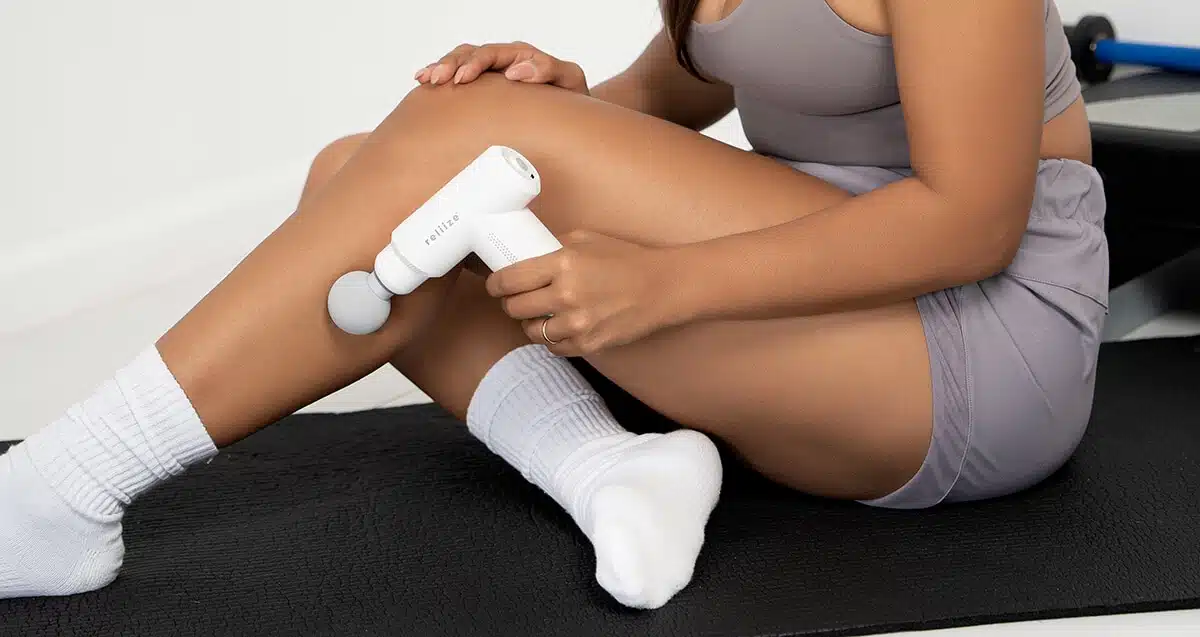
For larger areas or deeper-feeling fatigue, an at-home massage device can make recovery more convenient. A massage gun, for example, can provide percussion massage for the glutes, quads, calves, and upper back when used thoughtfully. Start on a low setting, keep the device moving, and use it for a short session rather than lingering intensely in one spot.
Reliize recovery devices are designed to make that kind of targeted comfort easier to fit into real life, whether you need a post-workout leg reset or a few quiet minutes for shoulder tension after work.
Massage should feel relieving, not punishing. Avoid using a massage gun or deep pressure directly over bones, joints, the front or side of the neck, varicose veins, numb areas, open skin, or fresh injuries. People who take blood thinners, have a clotting condition, reduced sensation, or a significant medical condition should ask a healthcare professional before using percussion or strong massage tools.
Hydrate and refuel for better recovery
Muscles do not recover on massage alone. Hydration supports normal body function, and regular meals give your body the energy and nutrients it needs after activity. You do not need to obsess over a perfect recovery drink after every walk or workout. For most everyday soreness, drinking water consistently and eating balanced meals is a strong foundation.
After a challenging workout, include both carbohydrates and protein within the next several hours. Carbohydrates help replenish energy stores, while protein provides amino acids your body uses to repair and maintain muscle tissue. A yogurt bowl with fruit, eggs with toast, tofu and rice, or a chicken-and-grain bowl can all be practical choices.
If you exercised in high heat, sweated heavily, or completed a long endurance session, a drink with electrolytes may also be helpful. Your needs depend on the activity, your environment, and your overall health. More is not always better, especially if you have been advised to limit fluids or electrolytes for a medical reason.
Give sleep the respect it deserves
A late-night workout, endless scrolling, and a packed schedule can make rest feel optional. Your muscles disagree. Sleep is when your body gets valuable time for physical and mental recovery, and poor sleep can make normal soreness feel more intense.
Build a wind-down routine that makes rest easier to choose. Dim the lights, put your phone away for a few minutes, take a warm shower, and use gentle massage or stretching as a cue that the day is closing. Even if your sleep is not perfect, protecting a consistent bedtime and wake time can make a meaningful difference.
Know when tired muscles need more than home care
Ordinary soreness should gradually improve, not become more severe every day. Get medical attention promptly if you have severe pain, major swelling, weakness, loss of function, numbness, fever, dark or cola-colored urine, chest pain, or trouble breathing. These symptoms can point to something more serious than routine muscle fatigue.
It is also worth checking in with a healthcare professional if pain persists for more than a week or two, keeps returning in the same place, or disrupts sleep and daily activities. Relief is the goal, but clear answers matter too.
Tonight, choose one small recovery ritual you can actually repeat: a warm shower, a ten-minute walk, a glass of water with dinner, or a few minutes of gentle massage. Your body does not need a perfect wellness routine. It needs consistent moments that remind it it is allowed to recover.
