





wellness
How to Relieve Jaw Tension Without Overdoing It
Nov
Your jaw may be working overtime long after the stressful meeting, commute, or scrolling session ends. Clenching while you focus, grinding during sleep, and holding tension in your face can leave you with a sore jaw, tight temples, headaches, or a strange sense that you cannot fully relax. To relieve jaw tension, the goal is not to force your mouth open or aggressively massage a painful spot. It is to signal safety to the muscles, reduce the habits that keep them switched on, and know when professional care is the smarter next step.
Why your jaw feels tight in the first place
The jaw is a small area with a big workload. The temporomandibular joints, or TMJs, connect your lower jaw to your skull and help you chew, talk, yawn, and swallow. Muscles around the cheeks, temples, neck, and shoulders all influence how comfortably those joints move.
Stress is a common driver. When your nervous system is on alert, you may press your teeth together without noticing. Screen-heavy work can add another layer: a forward head posture often recruits the neck and jaw muscles, while intense concentration can turn a relaxed resting mouth into a clenched one.
Nighttime grinding, also called bruxism, can create a different pattern. You may wake with sore cheeks, tooth sensitivity, a dull headache, or fatigue in the jaw even when you do not remember grinding. Gum chewing, hard foods, nail biting, dental changes, and sleeping positions can also make tenderness worse.
A useful reminder: at rest, your teeth should not be touching. Your lips can meet softly, but the jaw should have a little space. That small gap is often the starting point for meaningful relief.
How to relieve jaw tension in five gentle minutes
Start with this reset once or twice a day, especially after a long block of work. Nothing should create sharp pain, catching, or forceful popping. If it does, stop.
- Set your resting position. Sit tall with both feet supported. Let your shoulders drop, place the tip of your tongue lightly behind your upper front teeth, and allow your lower teeth to separate. Take five slow breaths, making the exhale a little longer than the inhale.
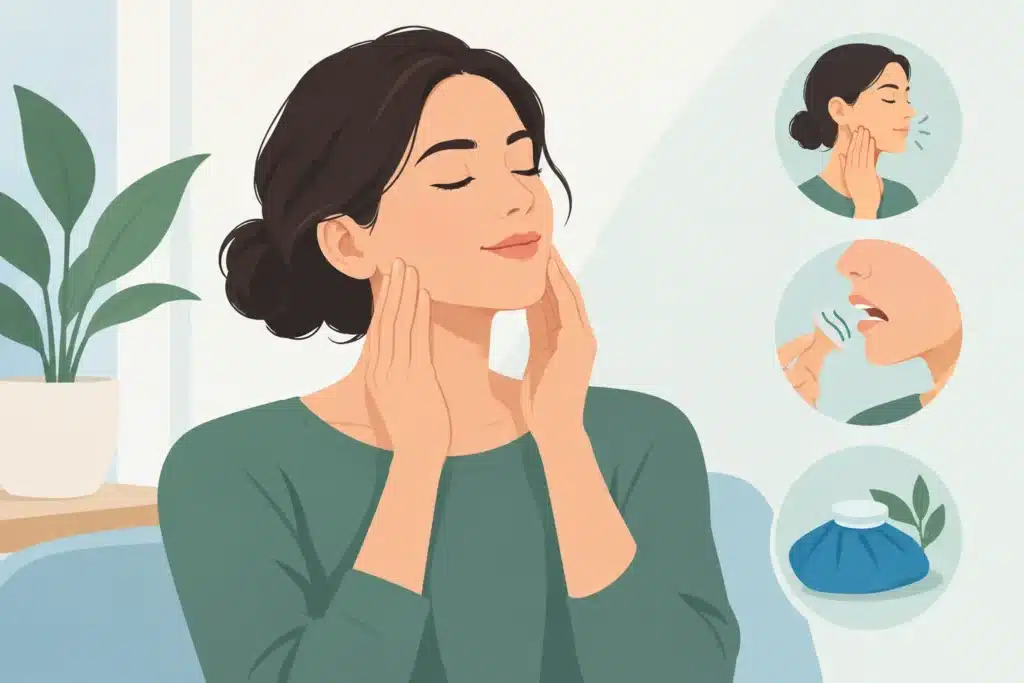
- Use warmth first. Hold a comfortably warm, damp towel against the side of your face for five to 10 minutes. Gentle heat can help guarded muscles settle before you try movement. Avoid very hot compresses, especially on sensitive skin.
- Try a controlled jaw opening. Keep your tongue resting against the roof of your mouth and slowly open only as far as feels easy, then close. Repeat five to eight times. The tongue position helps prevent the jaw from dropping too far or shifting abruptly.
- Release the cheeks and temples. With clean fingertips, use light circles over the thick cheek muscle just below your cheekbone and the temple area above your ears. Think slow and gentle, not deep tissue. Spend 30 to 60 seconds on each area.
- Reset your neck. Draw your chin straight back slightly, as if making a soft double chin, without looking down. Hold for three seconds and repeat five times. A less forward head position can take unnecessary load off the jaw.
This routine is meant to make the area feel calmer, not stretched to its limit. If your jaw is particularly irritated, heat and breathing may be more useful than movement that day.
What not to do when your jaw is aggravated
The instinct to rub harder or stretch wider is understandable, but it can backfire. Skip forceful jaw stretching, pressing directly into the joint in front of the ear, and chewing gum to “work it out.” It is also wise to avoid using percussion devices or massage guns on the jaw, face, throat, or front of the neck. Those areas are not appropriate targets for intense percussion.
For a few days, consider choosing softer foods that do not require wide opening or long chewing. Cut food into smaller bites, support your chin gently when you yawn if that feels comfortable, and set aside especially chewy snacks. This is not about eating bland food forever. It is a short-term way to give an overloaded system a break.
Make your workday less of a clench trigger
Jaw tension often returns because the underlying pattern has not changed. The most effective habit is simple: pair a jaw check with something you already do repeatedly, such as sending an email, filling a water bottle, or waiting for a page to load.
Each time, ask: Are my teeth touching? Are my shoulders creeping upward? Is my tongue pressing hard against my teeth? Then return to the relaxed resting position. Brief resets done many times can be more realistic than one long self-care session at night.
Your workstation matters, too. If you are constantly looking down at a laptop or phone, your head and neck may drift forward. Raise your screen when possible, bring your phone closer to eye level, and change positions regularly. The ideal setup depends on your body and workspace, but less neck strain usually gives the jaw a better chance to settle.
Caffeine and alcohol can be factors for some people, particularly if they notice more nighttime clenching after late-day coffee, energy drinks, or drinks before bed. There is no universal rule to eliminate them. Instead, watch for your own pattern over a couple of weeks.
Build an evening routine that helps your jaw let go
A tense jaw rarely exists in isolation. It often arrives with eye fatigue, shallow breathing, a busy mind, and shoulders that have barely moved all day. A calming routine helps because it lowers the overall level of activation your body is carrying into sleep.
Start by stepping away from demanding screens for a few minutes when you can. Follow with warmth on the jaw, a few relaxed breaths, and a gentle neck reset. If eye strain and head tension are part of your routine, an at-home relaxation device such as a smart eye massager may complement those quieter moments by encouraging you to pause, close your eyes, and decompress. Reliize designs wellness technology for exactly this kind of convenient, spa-like reset, but the device should support healthy habits rather than replace care for ongoing jaw pain.
Sleep position can make a difference as well. Sleeping face-down or with your jaw pressed into a firm pillow may increase morning soreness. Side and back sleeping are often more comfortable, though the best position is the one that lets your neck feel supported and your jaw stay neutral.
If you suspect nighttime grinding, a dentist can assess your teeth and discuss whether a custom oral appliance is appropriate. Over-the-counter options may suit some situations, but they do not fit everyone and can sometimes alter how the teeth meet. Personalized guidance is especially valuable when symptoms are frequent.
When jaw tension needs professional attention
Self-care is reasonable for mild, occasional tightness that improves with rest. But persistent pain deserves a real assessment, particularly because jaw symptoms can overlap with dental problems, sinus concerns, headaches, arthritis, and other conditions.
Make an appointment with a dentist or qualified healthcare professional if your symptoms last more than a couple of weeks, keep returning, interfere with eating or sleep, or come with tooth pain or sensitivity. A dentist can look for grinding-related wear, bite changes, infection, and other dental causes. A physical therapist or clinician with TMJ experience may help address movement patterns in the jaw, neck, and upper back.
Seek urgent medical care for jaw pain with chest pressure, shortness of breath, sweating, nausea, dizziness, or pain spreading to the arm, back, or neck. Sudden facial swelling, fever, injury, inability to open or close the mouth, or a jaw that locks also needs prompt attention.
You do not have to wait until tension becomes a daily headache to respond. A warm compress, a relaxed jaw position, and a few protected minutes away from the pressure of the day can become a small but powerful way to tell your body that it is finally allowed to let go.
