



wellness
How to Recover After Workouts Faster
Jun
That heavy, drained feeling a few hours after training is not always a sign of a great workout. Sometimes it is your body asking for better support. If you want to know how to recover after workouts, the goal is not just to feel less sore tomorrow. It is to restore energy, protect performance, and make your next session feel stronger instead of harder.
Recovery is where results start to show up. Your muscles repair, your nervous system settles down, and the inflammation from hard effort begins to normalize. Skip that part too often, and even a smart training plan can leave you feeling stiff, tired, and unmotivated.
Why recovery matters more than most people think
A lot of people treat recovery like a bonus. Train first, then maybe stretch if there is time. But recovery is part of the workout, not separate from it. The stronger your recovery habits, the easier it is to stay consistent, avoid burnout, and keep making progress.
That does not mean you need a professional athlete routine. Most adults are juggling work, screens, family responsibilities, stress, and limited sleep. In real life, recovery has to be practical. It needs to fit into your evenings, your lunch break, or the 20 minutes between finishing a workout and getting back to everything else.
There is also a difference between normal soreness and a body that is not bouncing back. Mild stiffness after a hard lift, long run, or intense class is common. Ongoing fatigue, poor sleep, elevated soreness, and a drop in performance usually mean your recovery habits need attention.
How to recover after workouts without overcomplicating it
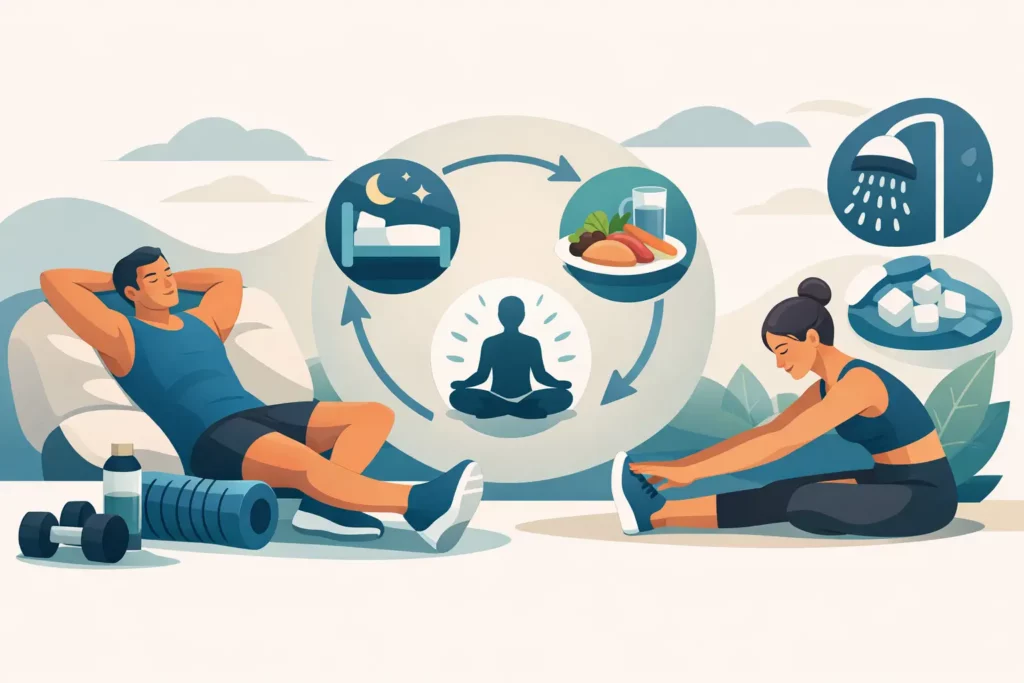
The basics still matter most. Sleep, hydration, food, movement, and stress control do more for recovery than trendy hacks. The smartest approach is to build a small system you can repeat.
Start with sleep, because nothing replaces it
If recovery had a foundation, it would be sleep. That is when muscle repair, hormone regulation, and nervous system recovery do their best work. You can use every recovery tool available, but if you are sleeping five or six broken hours a night, your body will struggle to catch up.
Aim for seven to nine hours when possible. If that feels unrealistic, work on consistency first. Going to bed and waking up at similar times often helps more than chasing the perfect routine for three days and then falling off.
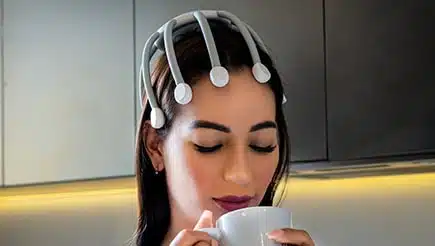
Your post-workout timing matters too. Late-night high-intensity training can leave some people wired instead of relaxed. If that sounds familiar, add a wind-down window after exercise. A warm shower, a low-light room, and a calming recovery device can help signal that it is time to shift out of go mode.
Rehydrate like it actually matters
After sweating, your body needs fluids back. Even mild dehydration can leave you with headaches, sluggishness, cramping, and that flat, heavy feeling the next day. Water is the starting point, but after longer or more intense sessions, electrolytes can also help.
A simple rule is to start rehydrating soon after your workout instead of waiting until you feel thirsty later. If your workout was especially sweaty, hot, or long, be more intentional. Clearer urine and a return to normal energy are useful signs that you are getting back on track.
Eat for repair, not just hunger
Your body needs raw materials to recover. Protein supports muscle repair, while carbohydrates help replenish energy stores. You do not need a perfect post-workout meal every time, but you do want something balanced within a reasonable window after training.
For many people, that looks like a meal or snack with protein and carbs within one to two hours. Greek yogurt and fruit, eggs and toast, a protein smoothie, chicken and rice, or oatmeal with added protein all work. The best choice is often the one you will actually prepare consistently.
If your goal is fat loss, this still matters. Under-fueling after hard training can backfire. Recovery suffers, cravings often rise later, and the next workout can feel noticeably worse.
Movement helps more than total stillness
It is tempting to collapse on the couch after a hard session and stay there for the rest of the day. Sometimes rest is exactly right, especially after an unusually tough workout. But complete inactivity can also make stiffness feel worse.
Light movement encourages circulation and helps muscles loosen up. A short walk, easy cycling, gentle stretching, or mobility work later in the day can make a real difference. You are not trying to train again. You are helping your body transition back to normal.
This is where people often overdo it. Recovery movement should feel easy. If it starts to feel like another workout, you are probably pushing past the point of benefit.
Massage and percussion can reduce that “locked up” feeling
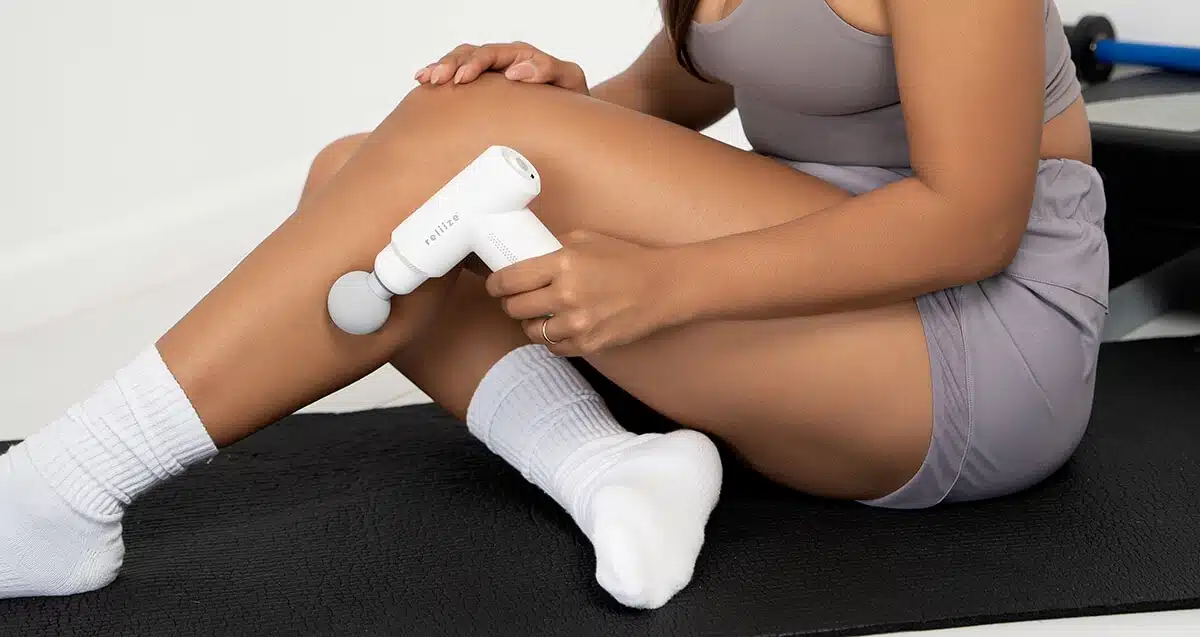
When muscles feel tight, heavy, or tender, hands-on recovery can help you relax and move more comfortably. Massage guns are popular for a reason. Used well, they can help reduce tension, improve local circulation, and make it easier to loosen up after strength training, long runs, or repetitive desk-and-gym routines.
The key is pressure and timing. More intensity is not always better. A short session on major muscle groups after exercise or later in the evening is often enough. If an area feels sharp, inflamed, or unusually painful, aggressive pressure is usually the wrong move.
For many people, at-home recovery tools are what make consistency possible. You may not have time for appointments or spa visits, but you can absolutely fit ten focused minutes into your evening. That convenience matters. Recovery only works when it happens often.
Heat, relaxation, and nervous system recovery
A lot of soreness is not just in the muscles. Hard training also taxes your nervous system, especially when workouts are layered on top of work stress, poor sleep, and constant screen time. That is why some of the best recovery strategies are not purely physical. They help you calm down.
Heat can be especially effective here. Warmth encourages relaxation, eases tension, and can make stiff muscles feel more mobile. For some people, that means a bath or shower. For others, it may be an infrared sauna blanket or another heat-based wellness tool that helps create a more complete reset at home.
The trade-off is timing and tolerance. Heat feels great for many forms of post-workout tightness, but if you are dealing with fresh swelling or a very irritated area, too much heat right away may not be ideal. Your body will usually tell you what feels relieving versus what feels like too much.
The most common recovery mistakes
People usually do not fail recovery because they know nothing. They fail because they ignore small warning signs until fatigue builds up.
One mistake is assuming soreness always equals progress. It can simply mean novelty, excess volume, or poor pacing. Another is waiting until you feel terrible to do anything about it. Recovery works better when it is proactive.
Many adults also underestimate stress. A hard workout on top of a brutal workweek and too little sleep creates a very different recovery demand than the same workout during a calm week. This is where flexibility matters. Some days your body can handle intensity. Other days it needs a lighter session and more support afterward.
A realistic post-workout recovery routine
If you want a practical answer to how to recover after workouts, keep it simple enough to repeat. Finish your session and start hydrating. Eat a balanced meal or snack within the next hour or two. Add five to ten minutes of light mobility or walking later. Use massage, percussion, or heat to reduce tension and help your body shift into recovery mode. Then protect your sleep that night.
That is not flashy, but it works.
If soreness hits hardest the next day, treat recovery as an all-day rhythm rather than a one-time event. Move around instead of sitting too long. Keep fluids up. Prioritize protein. Use a recovery device in the evening while you unwind. Small interventions repeated regularly tend to beat occasional big efforts.
For people balancing workouts with desk jobs, commuting, and mental fatigue, smart recovery tools can be the difference between staying on track and skipping the next session. That is part of why brands like Reliize resonate with busy wellness-minded adults. Relief that fits at home is easier to trust, easier to repeat, and easier to turn into a real habit.
There is no single perfect recovery formula because your training, stress load, age, sleep quality, and fitness level all shape what works best. But if your body feels beat up more often than rebuilt, that is your signal to change the way you recover. Give your body the support it has earned, and your workouts will stop feeling like something you have to bounce back from and start feeling like something that moves you forward.

