




wellness
Post Workout Recovery Routine Example That Works

Jun
You finished the workout, your heart rate is still up, and your legs already know tomorrow could be rough. That is exactly where a smart post workout recovery routine example can change the outcome. Recovery is not the extra part of training. It is the part that helps your body absorb the work, reduce soreness, and show up stronger the next time.
A lot of people train hard and recover casually. That usually looks like skipping the cooldown, forgetting to hydrate, eating whatever is nearby, and hoping sleep fixes everything. Sometimes it does. Often, it does not. If you want better energy, less stiffness, and a body that feels supported instead of run down, your routine after exercise matters just as much as the session itself.
A practical post workout recovery routine example
The best routine is one you can actually repeat. It does not need to be complicated, expensive, or time consuming. It needs to match the intensity of your workout, your schedule, and how your body tends to respond.
Here is a simple example that works well for most people after strength training, cardio, or a mixed workout.
First 5 minutes: bring your body down gradually
Instead of stopping cold, give your nervous system a smoother landing. Walk for a few minutes, pedal lightly, or move through easy mobility work that feels natural for the muscles you just used. This helps your breathing settle, reduces that shaky post-training feeling, and creates a cleaner transition out of high effort.
If your workout was especially intense, do less stretching and more gentle movement at first. Deep static stretching can feel good, but right after hard intervals or heavy lifting, your body may respond better to calm motion before longer holds.
Next 5 to 10 minutes: rehydrate and assess
Sweat loss is not always obvious, especially in air-conditioned gyms or shorter sessions. Start replacing fluids soon after training and pay attention to how you feel. Headache, fatigue, and lingering dizziness are often signs you need more water and possibly electrolytes.
This is also the moment to check in with your body. Are you dealing with normal muscle fatigue, or does something feel sharp, unstable, or unusually tight? Recovery works best when you adjust early instead of pushing through warning signs.
Within 30 to 60 minutes: eat for repair
Your post-workout meal does not need to be perfect. It should simply include protein to support muscle repair and carbohydrates to help restore energy. A smoothie with protein and fruit, eggs with toast, Greek yogurt with granola, or chicken and rice all get the job done.
The trade-off is timing versus practicality. If you trained after a full meal and are not hungry, you do not need to force down food immediately. But if you trained fasted, had a long session, or feel drained, eating sooner usually helps you recover faster and feel better later in the day.
Later that day: reduce tension before it builds
This is where many routines fall apart. Soreness often peaks hours after the workout, not right away. Light movement, a warm shower, and targeted muscle relief can make a noticeable difference before stiffness sets in.
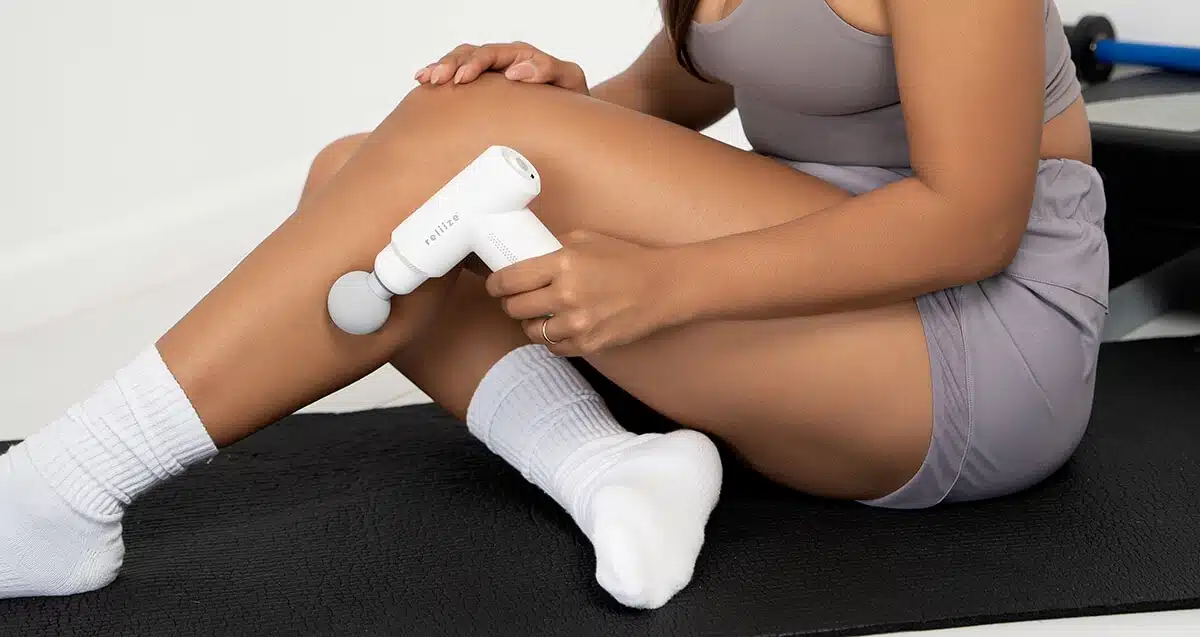
For tight quads, glutes, calves, shoulders, or upper back, percussion therapy can be a convenient at-home option. A massage gun is especially useful when you want focused relief without booking an appointment or relying on a foam roller for every area. The key is moderation. More pressure is not always better, and sore muscles respond best to controlled use rather than aggressive pounding.
If your body tends to hold onto stress as much as physical fatigue, heat can be just as helpful as muscle work. Gentle warmth supports relaxation, encourages circulation, and helps turn recovery into something you will actually look forward to instead of skip.
Why this routine works
A good post workout recovery routine example covers four things: it helps your heart rate come down, replaces what you used, supports tissue repair, and reduces leftover tension. When those pieces are in place, you are not just less sore. You are more ready for your next workout, your next workday, and the rest of your life outside the gym.
That matters because recovery is not only for athletes. If you sit at a desk, stare at screens, commute, lift, run, or carry stress in your shoulders and neck, your body is already managing a lot. Exercise is healthy stress, but it is still stress. The right recovery routine helps prevent that stress from piling up.
How to adjust your routine based on the workout
Not every session needs the same kind of aftercare. The smartest recovery plans are flexible.
After strength training
Prioritize protein, hydration, and targeted muscle relief. If you lifted heavy or trained lower body hard, expect delayed soreness and focus on gentle movement later in the day. Short walks, easy stretching, and a massage gun session on the surrounding muscle groups can help you stay looser without overdoing it.
After cardio or HIIT
Your nervous system may need more help calming down. Spend more time bringing your breathing under control and replacing fluids. If your workout included a lot of impact, such as running or jump training, your calves, hips, and feet may need extra attention. This is also when heat and rest can feel especially restorative.
After yoga or lower-intensity movement
You may not need much intervention, but you still benefit from hydration and a balanced meal. Recovery here is often more about consistency than intensity. A simple routine keeps your energy stable and helps you stay ready for the next session.
Recovery tools can make consistency easier
The best recovery plan is the one that fits real life. That is why at-home wellness devices have become so popular. They remove friction. You do not need a spa appointment, a therapist on call, or an elaborate setup to take care of your body.
If muscle soreness is your main issue, percussion therapy offers quick, targeted support. If your stress runs bigger than your muscles, whole-body warmth and calming rituals may have a stronger effect. If your workouts happen before or after long hours on a laptop, head, neck, and eye tension may be part of your recovery picture too.
That broader view is often what people miss. Recovery is not just about your hamstrings. It is about how your full body feels after effort, stress, screen time, and a packed schedule. Brands like Reliize are built around that reality, offering wellness technology that helps bring relief home in a way that feels easy to keep using.
What people often get wrong
One common mistake is treating soreness as proof of a better workout. Soreness can happen, but more soreness does not automatically mean more progress. If you are constantly stiff, exhausted, and under-recovered, your training quality usually drops.
Another mistake is stacking hard workout on top of hard workout without paying attention to sleep, food, and muscle tension. Recovery is cumulative, just like fatigue. Missing one step is not a disaster. Missing all of them every week usually catches up with you.
There is also an overcorrection some people make by trying every recovery trend at once. Ice baths, supplements, compression, saunas, stretching, breathwork, massage, mobility flows. Some of these can help, but not all are necessary. Start with the basics, then add tools that solve a real problem for you.
A realistic evening recovery flow
If you want one more usable version of a post workout recovery routine example, here is what an evening routine might look like after a demanding training session. You finish your workout with five minutes of easy walking, drink water on the way home, and eat a meal with protein and carbs within the hour. Later, you spend ten minutes using a massage device on the areas that tighten up most, then take a warm shower or use heat to relax your body. You keep the rest of the night low stress, avoid staying up too late, and give sleep a real chance to do its job.
That is not flashy. It is effective.
And if your life is busy, that matters more. You do not need a perfect routine. You need a recovery rhythm that feels doable on your most ordinary days. Once that is in place, your workouts tend to feel better, your body feels less beaten up, and your results become easier to maintain.
The real goal is not to collapse after training and hope for the best. It is to support your body in a way that feels good now and keeps paying off later. Start simple, stay consistent, and let recovery become part of your progress instead of an afterthought.

