



wellness
Percussion Recovery for Runners That Works
Jun
The day after a hard run can make simple things feel strangely difficult. Stairs sting, calves feel packed tight, and your hips remind you that mileage always leaves a receipt. That is exactly why percussion recovery for runners has become such a popular part of modern training – it gives you a fast, at-home way to loosen up sore tissue, feel more mobile, and get back to moving with less resistance.
For runners, recovery is not just about comfort. It shapes how consistently you can train, how well you handle back-to-back efforts, and how quickly your body settles after speed work, hills, or long runs. Percussion therapy fits this moment because it is practical. You do not need an appointment, a full hour, or a complicated routine. Used well, it can support circulation, reduce that heavy post-run feeling, and help muscles relax when they are stuck in a cycle of tension.
What percussion recovery for runners actually does
Percussion therapy uses rapid, repeated pulses delivered through a handheld device to work into the muscle. The sensation is very different from a traditional static massage. Instead of slow pressure that lingers, percussion creates quick bursts that can help the body perceive less tightness and more readiness to move.
For runners, that matters most in the areas that absorb repetitive impact. Calves, quads, hamstrings, glutes, and the muscles around the hips often take the biggest load. When those areas stay stiff, your stride can feel shorter, your form can get sloppy, and your next run can start with lingering fatigue instead of freshness.
That does not mean percussion therapy is magic, and it does not replace sleep, hydration, mobility work, or smart programming. What it can do is make recovery more accessible. If you are the kind of person who wants relief on your schedule, not whenever a massage appointment opens up, this is where percussion therapy earns its place.
Why runners respond so well to percussion therapy
Running is repetitive by nature. Even with great form, every run adds stress through the lower body. Over time, muscles can feel dense and overworked, especially when training volume increases or your life outside running is already physically demanding.
Percussion therapy works well for runners because it matches the reality of the sport. Most runners are not looking for a luxury treatment after every workout. They want something efficient. Five to ten minutes on the right muscle groups can feel like the difference between carrying soreness all day and feeling like your body is already turning the corner.
There is also a convenience factor that should not be underestimated. The best recovery routine is often the one you will actually do. A simple device that lives at home, charges easily, and can be used after a run, before bed, or during a quick reset on rest day fits real life better than recovery methods that demand more time and planning.
When to use percussion recovery for runners
Timing matters. Right after a run, percussion can help your muscles start to downshift. This is especially useful after harder efforts when the legs feel flooded and tight. A short session can support that transition from workout mode to recovery mode.
Later in the day, percussion can be even more comfortable. Once your heart rate is back to normal and your body has cooled down, the muscles are often more receptive to a calm, targeted session. This is a great time to focus on the spots that usually stay tight, like the calves or glutes.
Some runners also use percussion before a run, but the goal is different. Pre-run use should be brief and energizing, not deep and aggressive. Think of it as a way to wake up the tissue rather than work out soreness. If you overdo it before a workout, your legs can feel flat instead of primed.
How to use a percussion device without overdoing it
More pressure is not always better. That is one of the biggest mistakes runners make when they first try percussion therapy. If a muscle is already irritated, hammering it with the highest setting can leave it feeling more sensitive, not less.
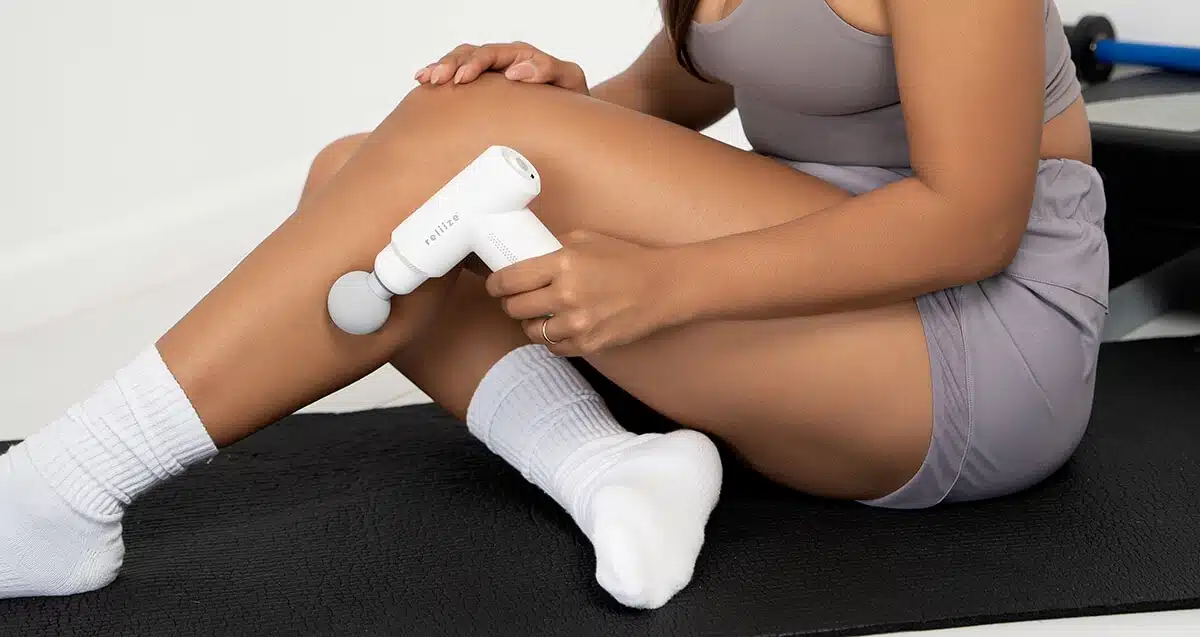
Start with a low or moderate speed and keep the device moving. Spend about 30 to 90 seconds on a muscle group, depending on the area and how tender it feels. Let the muscle relax under the treatment instead of bracing against it. If you are holding your breath or wincing, back off.
It also helps to think in muscle groups rather than chasing every ache. Work the calves from top to bottom, then move to the hamstrings, then the quads, then the glutes. This creates a more balanced effect and often reveals that the sorest spot is not always the source of the tension.
Avoid bony areas, joints, and any place that feels sharply painful. Percussion therapy is meant to support recovery, not challenge your pain tolerance. If something feels inflamed, bruised, or medically concerning, it is better to pause and assess than push through it.
The best muscle groups to target after runs
Calves are high on the list for obvious reasons. They absorb a huge amount of force and can become tight quickly, especially if you run hills, increase speed, or spend a lot of time in less supportive shoes. A gentle pass through the calf can reduce that packed, spring-loaded feeling that tends to linger after hard training.
Quads also respond well, especially after downhill efforts or longer runs. When quads stay overly tense, the entire lower body can feel stiff and heavy. Hamstrings are another common target, though they often need a slightly lighter touch than people expect.
Glutes and hip muscles deserve more attention than they usually get. Many runners focus only on what hurts in the lower leg, but tightness around the hips can change stride mechanics and contribute to that dragging sensation late in a run. Spending a little time there can help the whole body feel more balanced.
Feet, shins, and the area around the knee require more caution. These regions can be sensitive, and direct percussion is not always the right move. If your soreness feels very specific or unusually sharp, that is a sign to avoid guessing.
What percussion therapy can and cannot fix
Percussion therapy can help with everyday muscle soreness, post-run tightness, and the general fatigue that builds across a training week. It can make your legs feel lighter, improve comfort, and support a more consistent recovery routine.
What it cannot do is solve poor training structure. If you are constantly ramping mileage too fast, skipping rest, sleeping poorly, and running through pain, no recovery device will fully offset that. The same goes for actual injuries. Percussion can be a useful comfort tool, but it is not a substitute for diagnosis or treatment when something more serious is happening.
That trade-off matters because expectations shape results. The runners who get the most from percussion therapy usually treat it as one piece of a smarter system. They pair it with hydration, mobility, strength work, and enough recovery between demanding sessions.
Choosing a device that fits your routine
If you want percussion therapy to become part of your weekly rhythm, usability matters just as much as raw power. A device should feel easy to hold, simple to charge, and comfortable to use on your own body without turning recovery into another chore.
Noise level matters more than many people expect. If your device is too loud, you are less likely to use it while unwinding at night or during a quick evening reset. Adjustable speed is also important because runners need options. Some muscle groups handle firmer treatment well, while others do better with a lighter setting.
This is where modern at-home recovery tools stand out. A well-designed percussion device gives you targeted relief without the friction of booking appointments or rearranging your day. For runners who want results, convenience is not a bonus feature – it is what makes consistency possible.
Reliize speaks to that reality well by focusing on accessible wellness tech that fits into everyday life. For runners trying to recover smarter at home, that kind of ease can make the difference between owning a device and actually using it.
Building a recovery habit that lasts
The best approach is simple enough to repeat. After your harder runs, spend five to eight minutes using percussion on the main muscle groups that took the load. On easy days, use it more selectively if something feels unusually tight. On rest days, a short session can help keep your body feeling mobile without adding training stress.
You do not need a perfect ritual. You need a realistic one. Recovery habits stick when they feel good, fit your schedule, and create a noticeable payoff. If your legs feel looser the next morning, if getting out the door for your next run feels easier, and if soreness stops dominating your week, that is meaningful progress.
Running asks a lot from your body, but recovery no longer has to feel out of reach. A smart, consistent percussion routine can bring relief closer, help your training feel more sustainable, and give your legs the kind of attention they usually earn the hard way. If you run often, that small shift in how you recover can change how you feel every mile after it.

