


wellness
Massage Gun vs Foam Roller: Which Wins?
Jun
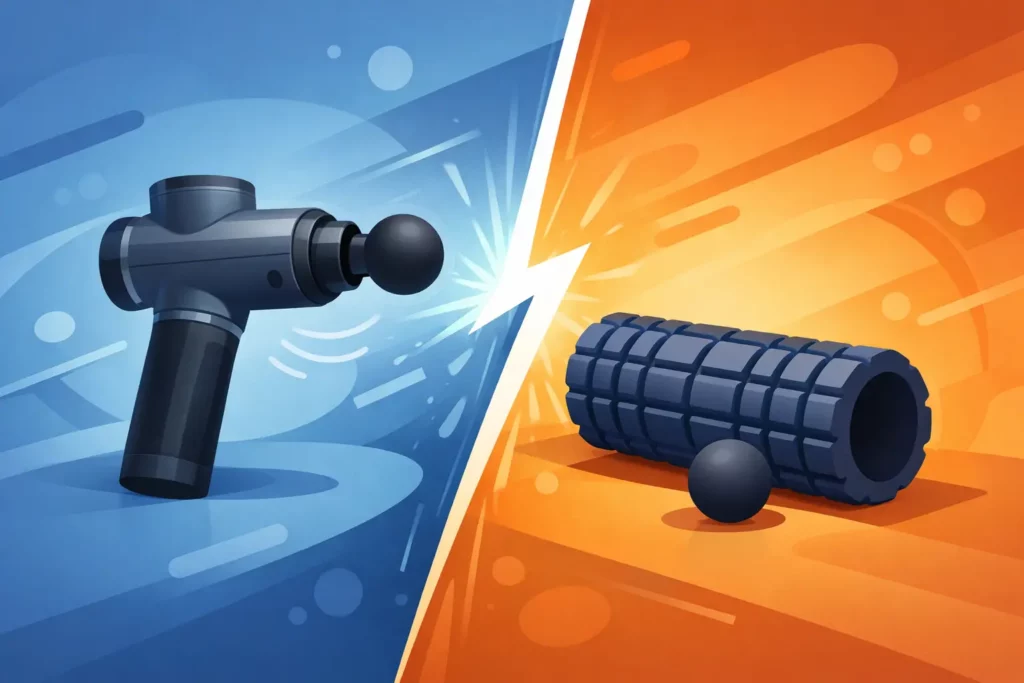
You feel it when you stand up from your desk, finish a workout, or wake up with that stiff, heavy ache in your back or legs. When it comes to massage gun vs foam roller, the real question is not which tool is better in every situation. It is which one gives you faster, easier relief for the way your body feels today.
Both tools are designed to reduce muscle tension, improve movement, and help your body recover. But they do it in very different ways. One uses targeted percussion to hit specific areas with minimal effort. The other uses your body weight to create broad pressure across larger muscle groups. If you want an at-home recovery routine that feels effective, convenient, and worth the money, those differences matter.
Massage gun vs foam roller: the core difference
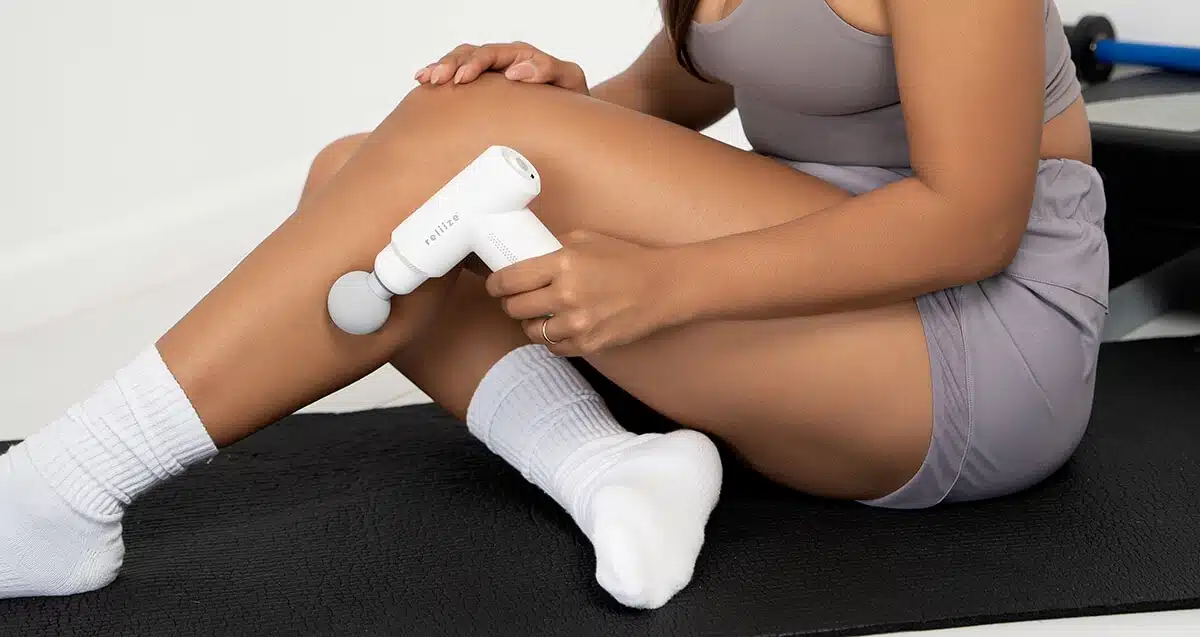
A massage gun delivers rapid pulses into the muscle. That percussion can help stimulate blood flow, reduce the feeling of tightness, and make sore spots feel more manageable in a short session. It is hands-on, targeted, and usually easier to control when you want relief in a very specific place, like the calf, shoulder, or glute.
A foam roller works through sustained pressure and slow rolling. You place part of your body on the roller and use your weight to move over the muscle. That can help release tension, especially in larger areas like the quads, hamstrings, upper back, and IT band region. It is simple, low-tech, and still a go-to for warmups and cooldowns.
The practical difference is effort. A massage gun does more of the work for you. A foam roller asks more from your body positioning, balance, and tolerance for pressure. If you are already tired, stressed, or sore, that alone can shape which one you will actually use consistently.
Which feels better when you are sore?
For many people, a massage gun feels easier to tolerate. You can start with a lower speed, adjust the pressure, and keep the treatment short. That makes it a strong option for post-workout soreness or end-of-day muscle tension, especially if you want relief without dropping to the floor for ten minutes.
Foam rolling can be effective, but it often feels more intense in the moment. Since you are putting body weight onto a dense surface, it can feel uncomfortable on tender muscles. Some people like that deep-pressure sensation. Others avoid it because it feels like work when they already feel beat up.
This is where convenience becomes more than a bonus. The best recovery tool is often the one you will use on a regular basis. A device that feels approachable after a long day usually wins over a tool that stays in the corner.
When a massage gun makes more sense
A massage gun usually has the advantage when precision matters. If your soreness is concentrated in one area, percussion therapy lets you work around that spot without compressing your whole body into the floor. That can be especially useful for desk workers with neck and shoulder tightness, runners with tight calves, or anyone dealing with post-exercise soreness in smaller muscle groups.
It is also a strong fit if you want a faster routine. A few minutes per muscle group can feel productive without turning recovery into another task on your list. For busy professionals and anyone building a practical self-care routine at home, that ease matters.
There is also a comfort factor. If getting down on the floor is inconvenient, painful, or simply annoying, a massage gun removes that barrier. You can use it while sitting on the couch, standing after a workout, or winding down before bed.
When a foam roller still deserves a place
Foam rollers still have real value, especially for larger muscle groups and general mobility work. If you want to open up your quads, hamstrings, or upper back before exercise, rolling can help you feel looser and more prepared to move. Many people also like the broad pressure a roller gives because it covers more surface area at once.
Cost is another reason people choose foam rollers. They are usually more affordable upfront, and there is no battery, charging, or settings to think about. For someone who wants the most basic recovery tool possible, that simplicity can be appealing.
Still, affordable does not always mean more useful long term. If a cheaper tool is harder to use, less comfortable, or too time-consuming, it may not deliver as much real value in daily life.
Massage gun vs foam roller for recovery
If your goal is quick recovery after exercise, both can help, but in different ways. A massage gun is often better for short, targeted sessions right after training or later in the day when soreness starts building. It can help muscles feel less stiff without requiring a lot of setup.
A foam roller is often better as part of a longer recovery or mobility routine. It fits well before workouts, after workouts, or on active recovery days when you are willing to spend more time moving through larger muscle groups.
The trade-off is precision versus coverage. Massage guns are more exact. Foam rollers are broader. If you usually feel one stubborn knot in your shoulder or one tight calf after exercise, the massage gun often feels more effective. If your whole lower body feels tight from a long run or leg day, the roller can cover more ground.
What about flexibility and mobility?
Foam rollers are often associated with mobility because they naturally pair with stretching and movement drills. You roll, pause, breathe, and then move into your next exercise. That rhythm works well in a warmup.
Massage guns can support mobility too, especially when used before movement to reduce that stiff, restricted feeling in a muscle. They are not a replacement for stretching or strength work, but they can help your body feel more ready to move.
The difference comes down to how you like to prepare. If you enjoy a structured floor routine, a foam roller fits naturally. If you want something faster and more convenient, a massage gun is often the easier choice.
Ease of use changes everything
This is the part many comparison articles miss. Recovery tools do not work just because they are effective in theory. They work when they fit your routine.
A massage gun is usually easier to grab, use for two to five minutes, and put away. That friction-free experience is a major reason percussion devices have become so popular in at-home wellness. They meet people where they are – busy, tired, and looking for relief without adding another chore.
A foam roller asks for more space, more setup, and more physical effort. If you are highly motivated, that may not matter. If you are trying to create a sustainable self-care habit, it often does.
For many adults dealing with stress, muscle tension, and screen-heavy routines, the easiest tool tends to become the most valuable one.
So which one should you buy?
If you want targeted relief, faster sessions, and a more comfortable at-home recovery experience, a massage gun is usually the better investment. It is especially appealing if you deal with localized tension, workout soreness, or daily stiffness from sitting too long. A smart device can make recovery feel less like maintenance and more like immediate relief.
If your budget is tight, you enjoy mobility work, and you do not mind a more hands-on routine, a foam roller can still be a solid choice. It is simple, effective for larger muscle groups, and useful in warmups and cooldowns.
For some people, the smartest answer is not massage gun or foam roller. It is massage gun first, foam roller second. A massage gun covers convenience and precision. A foam roller can still support longer mobility sessions when you want broader pressure.
That said, if you are choosing just one, think about your real habits, not your ideal ones. If you are more likely to use a recovery tool consistently when it feels quick, modern, and easy, a massage gun will probably deliver better results in everyday life. That is exactly why so many wellness-focused shoppers are moving toward tech-enabled recovery devices from brands like Reliize.
The right tool should make relief feel simple enough to use today, not someday.

