





wellness
How to Build Sleep Rituals That Actually Stick
Jun
You do not need a perfect night routine. You need a repeatable one. If you are figuring out how to build sleep rituals, the goal is not to create an Instagram-worthy evening. It is to teach your body and mind that sleep is coming, so stress, screen fatigue, and mental chatter stop running the show.
For most adults, sleep problems are not just about being “bad at sleeping.” They are often the result of overstimulation, inconsistent timing, late-night work, eye strain, tension in the neck and shoulders, or a nervous system that never fully powers down. That is why sleep rituals matter. They create a reliable transition from alert mode to recovery mode, and that transition is where better sleep usually begins.
Why sleep rituals work better than forcing sleep
Trying to force yourself to sleep usually backfires. The harder you push, the more awake you feel. A sleep ritual works differently. Instead of demanding sleep on command, it gives your brain a pattern to recognize.
When certain cues happen in the same order each night, your body starts to connect them with rest. Dimmer light, less stimulation, warmth, calm pressure, slower breathing, and a familiar sequence all help lower arousal. Over time, your routine becomes a signal. That signal can be more powerful than willpower.
This is also why random self-care does not always help. A hot shower one night, scrolling in bed the next, tea on a third night – those can all feel relaxing in the moment, but they do not create a dependable rhythm. Sleep rituals are effective because they are consistent, not because they are complicated.
How to build sleep rituals around your real life
The best sleep ritual is one you will still do on a stressful Tuesday. That means it needs to fit your schedule, energy level, and attention span. If your routine takes 90 minutes and requires perfect discipline, it is probably not built to last.
Start by choosing a target bedtime that is realistic, not aspirational. If you usually go to bed at midnight, do not suddenly aim for 9:30. Shift gradually. Even moving your bedtime earlier by 15 to 20 minutes can help if you keep it consistent.
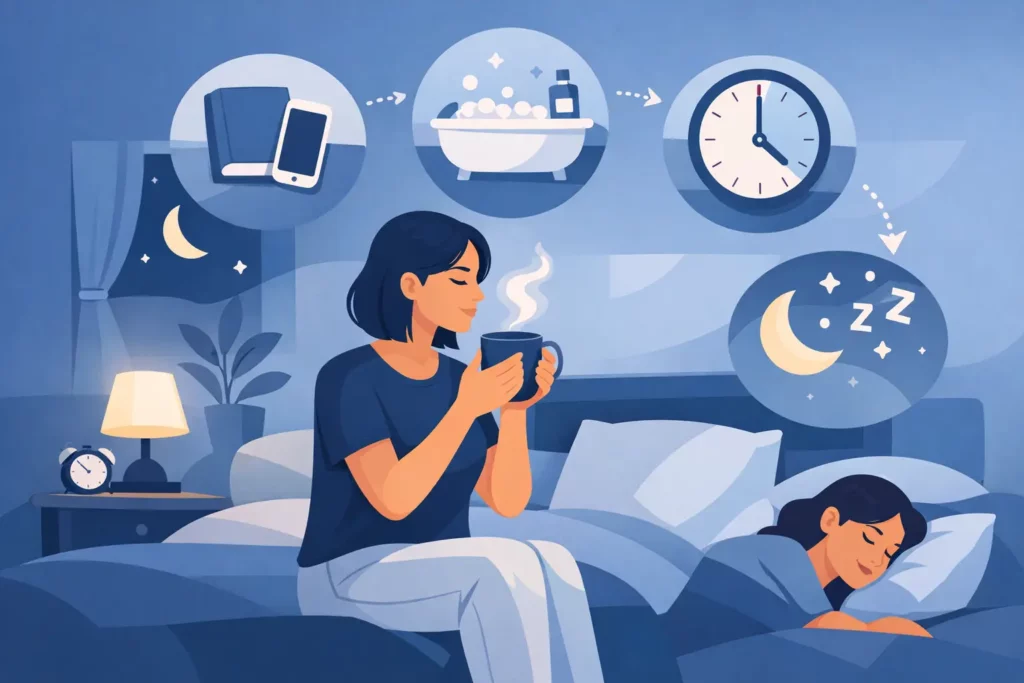
Then build a short sequence you can repeat most nights. Think in phases instead of hacks. First, reduce stimulation. Next, release physical tension. Then create a clear cue for sleep. That flow feels natural, and it is easier to maintain than a long checklist.
Start with a shutdown window
A strong ritual usually begins 30 to 60 minutes before bed. This is your shutdown window, when you stop asking your brain for peak performance. Work emails, intense workouts, emotionally loaded conversations, and bright screens all make it harder to settle.
If you cannot avoid screens completely, lower brightness and stop doing high-engagement activities. Watching a calm show is different from answering messages, comparing yourself on social media, or getting pulled into news cycles. The point is not perfection. It is reducing the amount of stimulation your brain has to process right before sleep.
Give your body a physical cue
Many people think of sleep as purely mental, but the body often needs help letting go first. Tight shoulders, jaw tension, headaches, and eye fatigue can keep you feeling alert even when you are tired.
This is where tactile relaxation can make a real difference. Gentle heat, massage, compression, or calming pressure can help shift your body out of tension mode. For people who spend long hours on screens, an evening recovery step focused on the eyes, temples, head, neck, or upper body can feel especially effective because it addresses one of the most common sources of late-night discomfort.
It depends on what keeps you awake. If your mind races but your body feels calm, breathing exercises may be enough. If your body holds stress all day, adding a recovery tool or massage step can make the ritual much more believable to your nervous system. The key is finding a cue your body responds to quickly.
What to include in a sleep ritual
If you are wondering how to build sleep rituals without overthinking them, keep your routine anchored to three or four actions. That is usually enough.
A practical sequence might look like this: dim the lights, wash your face, use a relaxation device or do a brief massage session, then get into bed and breathe slowly for a few minutes. Another person might prefer herbal tea, a warm shower, a few pages of reading, and lights out. Both can work if they are calming and repeated consistently.
The trade-off is that more steps can feel luxurious, but fewer steps are often easier to sustain. If you are always busy, a 10-minute ritual done nightly will beat a 45-minute routine you abandon after four days.
Protect the sensory environment
Your sleep ritual does not stop at behavior. Your environment matters too. A cooler room, softer lighting, and less noise all support the ritual you are trying to build.
This is especially useful for people who feel tired but wired. If your bedroom still feels like an extension of your workday, your brain may not treat it as a recovery space. Small changes can help create separation. Put chargers out of reach, reduce harsh overhead lighting, and make your bed feel inviting enough that you want to be in it before you are fully exhausted.
Use comfort strategically
Comfort is not a luxury when it comes to better sleep. It is a signal of safety. Warmth on tired muscles, soothing pressure around the eyes, or a relaxing head massage can tell your body it is allowed to let go.
That is one reason smart wellness devices have become part of modern evening routines. They make it easier to get spa-like relief at home without appointments, guesswork, or a lot of extra effort. For adults dealing with screen fatigue, headaches, or stress buildup, adding one reliable recovery tool to the evening can turn relaxation from a vague idea into an actual habit.
Common mistakes that make sleep rituals fail
The most common mistake is making the ritual too ambitious. If it feels like another task to complete, it creates resistance instead of relief.
The second mistake is inconsistency. You do not need to do the routine perfectly every night, but your body does benefit from familiar timing and familiar cues. A ritual repeated five nights a week is far more effective than a “reset” routine you only do when you are already exhausted.
Another issue is choosing activities that seem relaxing but are secretly activating. Alcohol may make you sleepy at first, but it often disrupts sleep quality later. Scrolling can feel like downtime, but it keeps your brain engaged. Even late-night productivity can become a trap if crossing things off your list gives you a temporary second wind.
There is also the problem of expecting instant results. A good sleep ritual can help you feel calmer on night one, but stronger sleep associations usually build over time. Give it at least one to two weeks before deciding it is not working.
When to adjust your routine
If your ritual is not helping, do not scrap the whole thing. Edit it. Shorten it, simplify it, or move it earlier.
If you keep falling asleep on the couch before your routine starts, begin your wind-down sooner. If you are still mentally activated in bed, your pre-sleep activities may not be calming enough. If physical discomfort is the main issue, add more body-based relief instead of trying to think your way into sleep.
This is where personalization matters. Some people need silence. Others relax better with soft audio. Some need stretching, while others respond better to warmth and massage. The right routine is the one that lowers friction and makes rest feel easier to access.
A simple template for building a ritual that lasts
If you want a place to start tonight, keep it simple. Pick a bedtime, set a 30-minute wind-down window, dim your space, and choose one physical relaxation step and one quiet final step in bed. That is enough to begin.
For example, you might stop working at 10:00, lower the lights, use a relaxing eye or head massage device for 10 to 15 minutes, then get into bed and focus on slow breathing. That sequence is short, realistic, and easy to repeat. It does not ask for a total lifestyle overhaul. It simply gives your body a better path into rest.
At Reliize, that is the kind of self-care we believe in – not complicated routines that look impressive for a week, but accessible wellness that helps you feel relief you can actually sustain.
A sleep ritual should feel like support, not pressure. Build one that meets you where you are, repeat it often enough that your body trusts it, and let better nights come from rhythm instead of force.

